| REACTIONS BETWEEN HALOGENOALKANES AND HYDROXIDE IONS This page looks at the reactions between halogenoalkanes (haloalkanes or alkyl halides) and hydroxide ions from sodium or potassium hydroxide solution. It covers both substitution and elimination reactions. To a large extent, this page simply brings together information from a number of other pages on the site. If you want information about the mechanisms for these reactions you will find them elsewhere. This page has links to all the other pages that you will need. Substitution or elimination? There are two different sorts of reaction that you can get depending on the conditions used and the type of halogenoalkane. Primary, secondary and tertiary halogenoalkanes behave differently in this respect. | |||||||||
| Substitution reactions In a substitution reaction, the halogen atom is replaced by an -OH group to give an alcohol. For example:   Or, as an ionic equation:  In the example, 2-bromopropane is converted into propan-2-ol. The halogenoalkane is heated under reflux with a solution of sodium or potassium hydroxide. Heating under reflux means heating with a condenser placed vertically in the flask to prevent loss of volatile substances from the mixture. The solvent is usually a 50/50 mixture of ethanol and water, because everything will dissolve in that. The halogenoalkane is insoluble in water. If you used water alone as the solvent, the halogenoalkane and the sodium hydroxide solution wouldn't mix and the reaction could only happen where the two layers met. | |||||||||
| Elimination reactions Halogenoalkanes also undergo elimination reactions in the presence of sodium or potassium hydroxide.  The 2-bromopropane has reacted to give an alkene - propene. Notice that a hydrogen atom has been removed from one of the end carbon atoms together with the bromine from the centre one. In all simple elimination reactions the things being removed are on adjacent carbon atoms, and a double bond is set up between those carbons. The halogenoalkane is heated under reflux with a concentrated solution of sodium or potassium hydroxide in ethanol. Propene is formed and, because this is a gas, it passes through the condenser and can be collected. | |||||||||
|
What decides whether you get substitution or elimination? The reagents you are using are the same for both substitution or elimination - the halogenoalkane and either sodium or potassium hydroxide solution. In all cases, you will get a mixture of both reactions happening - some substitution and some elimination. What you get most of depends on a number of factors. The type of halogenoalkane This is the most important factor.
The solvent The proportion of water to ethanol in the solvent matters.
Higher temperatures encourage elimination. Concentration of the sodium or potassium hydroxide solution Higher concentrations favour elimination. In summary For a given halogenoalkane, to favour elimination rather than substitution, use:
| |||||||||
Showing posts with label HALOALKANES AND HALOARENES. Show all posts
Showing posts with label HALOALKANES AND HALOARENES. Show all posts
Saturday, April 25, 2020
REACTIONS BETWEEN HALOALKANES AND HYDROXIDE IONS
HALOALKANES AND HALOARENES NOTES
Classification of Halogen Derivatives
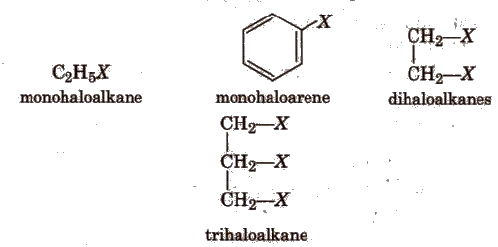
On the basis of number of halogen atoms present, halogen derivatives are classified as mono, di, tri, tetra, etc., halogen derivatives, e.g.,
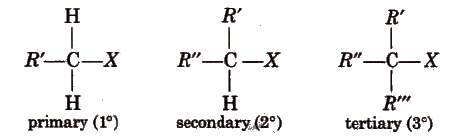
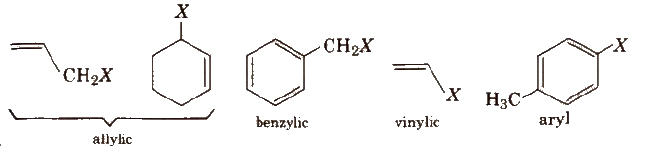
On the basis of the nature of the carbon to which halogen atom is attached, halogen derivatives are classified as 1°, 2°, 3°, allylic, benzylic, vinylic and aryl derivatives, e.g.,
General Methods of Preparation of Haloalkanes
1. From Alcohols
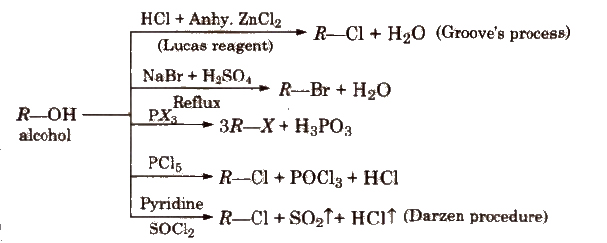
In Groove’s method, ZnC12 is used to weaken the C-OH bond. In case of 3° alcohols, ZnC12 is not required.
The reactivity order of halogen acids is HI > HBr > HCl.
Darzen procedure is the best method for preparing alkyl halides from alcohols since both the by products (SO2 and HCl) are gaseous and escape easily.
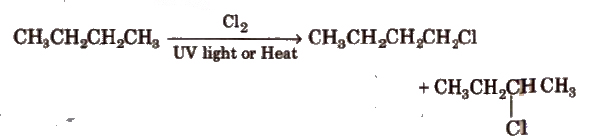
2. Free Radical Halogenation of Alkanes
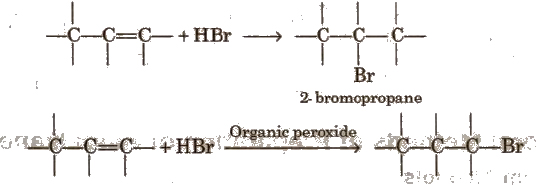
Addition of Hydrogen Halides on Alkenes
1. Finkelstein Reaction

2. Swarts Reaction
H3C – Br + AgF → H3C – F + AgBr
Hg2F2, COF2 and SbF3 can also be used as a reagent for Swarts reaction.
3. Hunsdiecker Reaction

Physical Properties of Haloalkanes
1. Boiling point orders
- R – I > R – Br > R – CI > R – F
- CH3 – (CH2)2 – CH2Br > (CH3)2 CHCH2Br > (CH3)3CBr
- CH3CH2CH2 > CH3CH2X > CH3X
2. Bond strength of haloalkanes decreases as the size of the halogen atom increases. Thus, the order of bond strength is
CH3F > CR3Cl > CR3Br > CH3I
3. Dipole moment decreases as the electronegativity of the halogen decreases.
4. Haloalkanes though polar but are insoluble in water as they do not form hydrogen bonding with water.
5. Density order is
RI > RBr > RCl > RF (For the same alkyl group)
CH3I > C2H5I > C3H7I
Chemical Reactions of Haloalkanes
1. Nucleophilic Substitution Reactions (SN reactions)
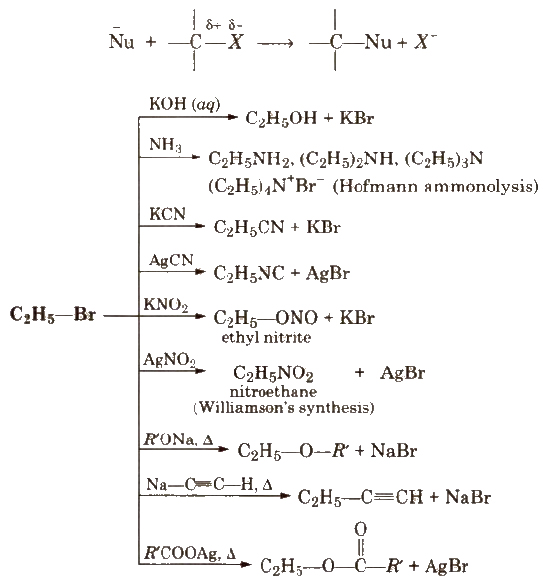
kCN is predominantly ionic and provides cyanide ions in solution, which is ambident nucleophile and bind with carbon side to form as the major product, while AgCN is covalent and form isocyanide as the major product.
Like KCN, KNO2 form R-ONO while AgNO2 produces R-NO2 as product. Vinyl chloride is less reactive towards nucleophilic substitution reactions due to resonance.
Nucleophilic substitution reactions are of two types
(a) SN1 type (Unimolecular nucleophilic reactions proceed in two steps:
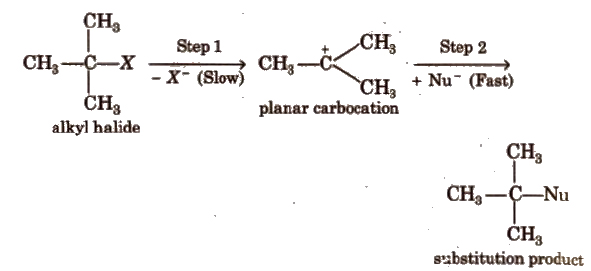
Rate, r = k [RX). It is a first order reaction.
Reactivity order of alkyl halide towards SN1 mechanism
3° > 2° > 1°
Polar solvents, low concentration of nucleophiles and weak nucleophiles favour SN1 mechanism.
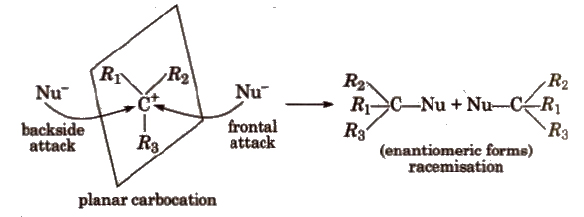
In SN1 reactions, partial racemisation occurs due to the possibility of frontal as well as backside attack on planar carbocation.
(b) SN2 type (Bimolecular nucleophilic substitution) These reactions proceed in one step and is a second order reaction with r = k[RX] [Nu].
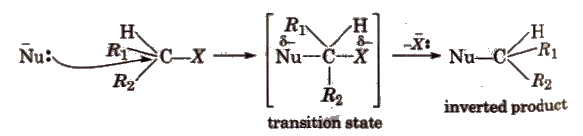
During SN2 reaction, inversion of configuration occurs (Walden inversion) i.e., starting with dextrorotatory halide a laevo product is obtained and vice-versa, e.g.,
Reactivity of halides towards SN2 mechanism is
1° > 2° > 3°
Rate of reaction in SN2 mechanism depends on the strength of the attacking nucleophile. Strength of some common nucleophiles is
:CN– > : I– > : OR– > : OH– > CH3COO: > H2O > F–
Non-polar solvents, strong nucleophiles and high concentration of nucleophiles favour SN2 mechanism.
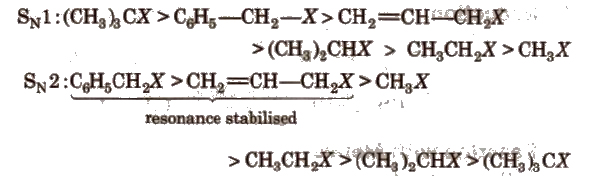
Relative rates of some alkyl halides in SN1 and SN2 reactions are in the order
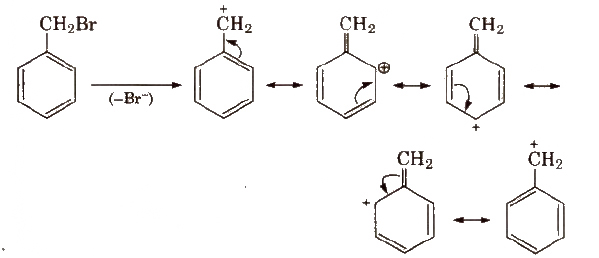
Resonating structure of benzyl carbocations are
Relative reactivity of alkyl halides for same alkyl group is
RI > RBr > RCI > RF
2. Elimination Reactions
Dehydrohalogenation is a β – elimination reaction in which halogen is from α-carbon atom and the hydrogen from the α-carbon according to Saytzeff rule, e.g.,
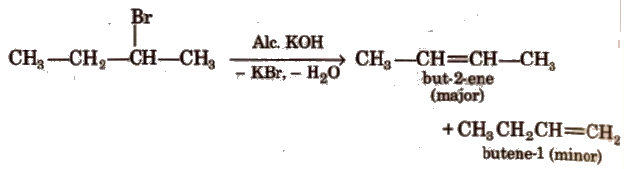
Ease of dehydrohalogenation among halides
3° > 2° > 1°

3. Reduction
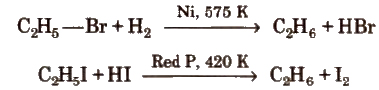
4. Reaction with Metals
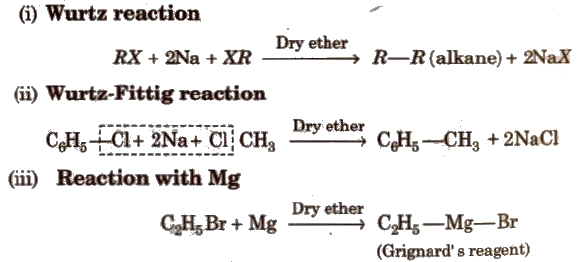
Grignard reagent is never isolated in the solid state as it explodes in dry state. So it is used as ethereal solution.
5. lsomerisation

General Methods of Preparation of Aryl Halides
1. By Halogenation of Aromatic Hydrocarbons
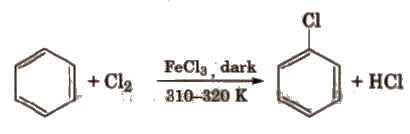
It is an electrophilic substitution reaction.
2. By Side Chain Halogenation
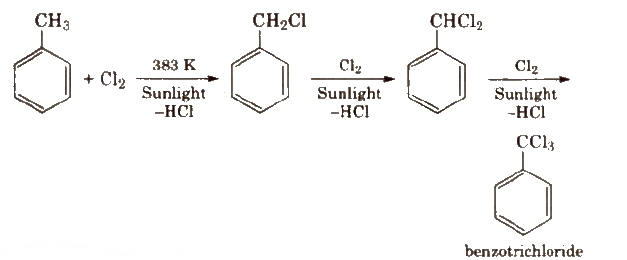
(It involves free radical mechanism.)
3. From Benzene Diazonium Salt
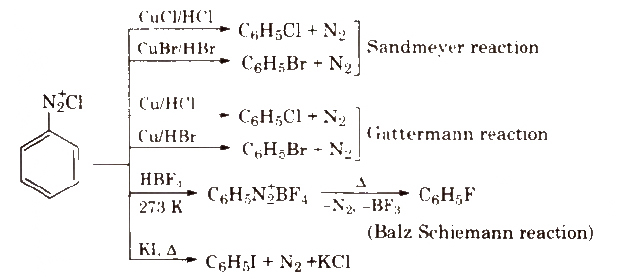
4. From Phenol
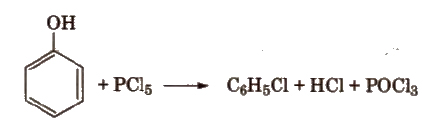
Physical Properties of Aryl Halides
1. Aryl halides are colourless liquids or colourless solids with characteristic odour.
2. Boiling point generally increases with increase in the size of aryl group or halogen atom. Boiling point order
Ar – I > Ar – Br > Ar – Cl > Ar – F
3. The melting point of p -isomer is more than 0- and m-isomer.
This is because of more symmetrical nature of p-isomer.
4. Due to resonance in chlorobenzene, C-CI bond is shorter and hence, its dipole moment is less than that ofcyclohexylchloride.
Chemical Properties of Aryl Halides
1. Nucleophilic Substitution Reaction
Aryl halides are less reactive towards nucleophilic substitution reaction. Their low reactivity is attributed due to the following reasons:
- Due to resonance, C-X bond has partial double bond character.
- Stabilisation of the molecule by delocalisation of electrons.
- (Instability of phenyl carbocation.
However, aryl halides having electron withdrawing groups (like – NO2, -SO3H, etc.) at ortho and para positions undergo nucleophilic substitution reaction easily.
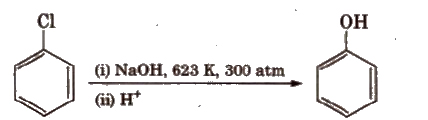
Presence of electron withdrawing group (-NO2) increases the reactivity.
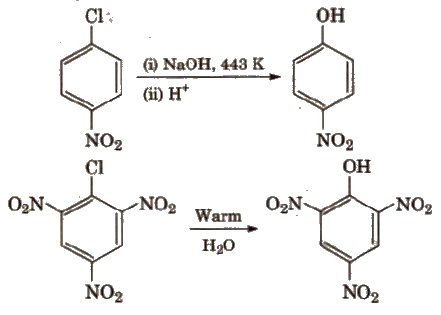
2. Electrophilic Substitution Reactions
Halogens are deactivating but O, p-directing. Thus, chlorination, nitration, sulphonation and Friedel Craft’s reaction give a mixture of o- and P- chloro substituted derivatives.
(i) Halogenation
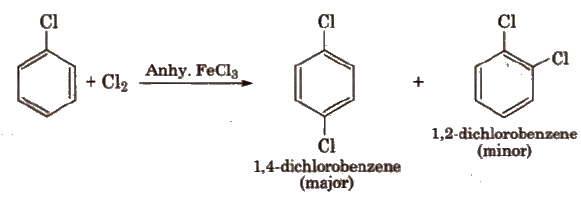
(ii) Nitration
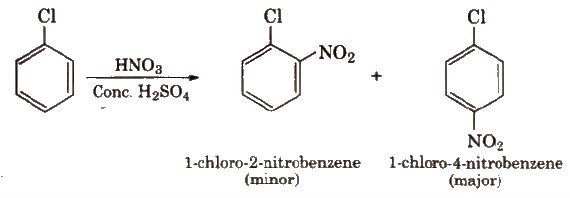
(iii) Sulphonation
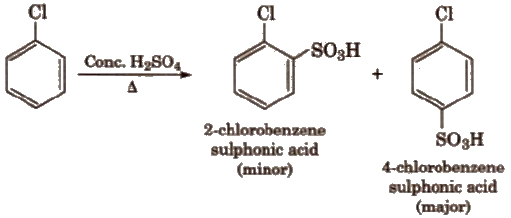
(iv) Friedel-Crafts reaction
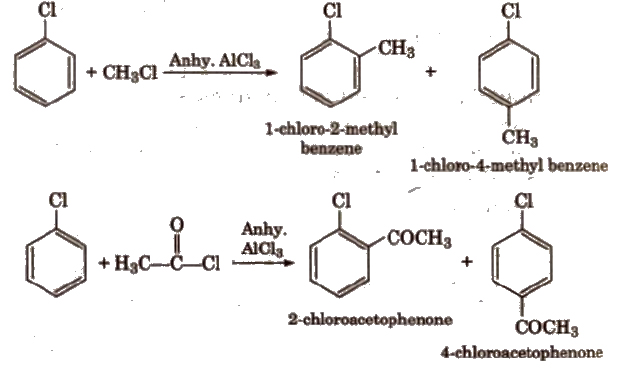
3. Reaction with Metals
(i) Wurtz Fittig reaction
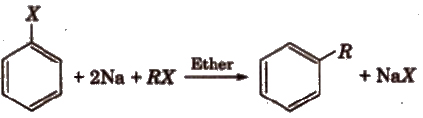
(ii) Fitting reaction
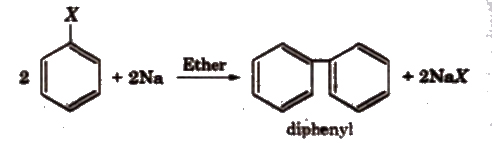
(iii) Ullmann reaction
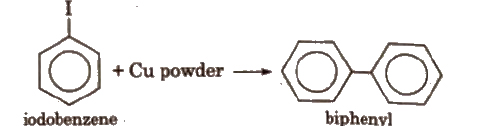
Dlhalogen Derivatives
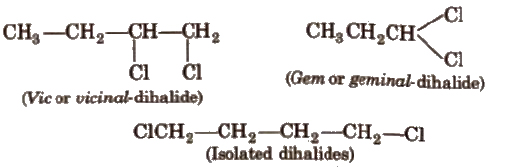
Dichloromethane (CH2Cl2) is widely used as a solvent, as a propellant in aerosols. Direct contact of dichloromethane in humans causes intense burning and milk redness of the skin.
Trihalogen Derivatives
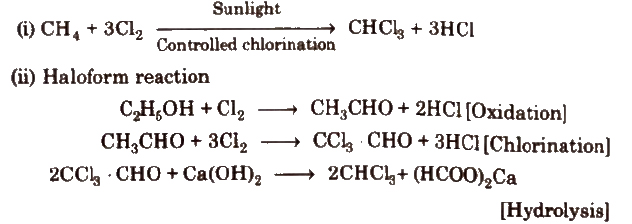
1. Chloroform [Trichloromethane, CHCl3]
Methods of preparation
Properties
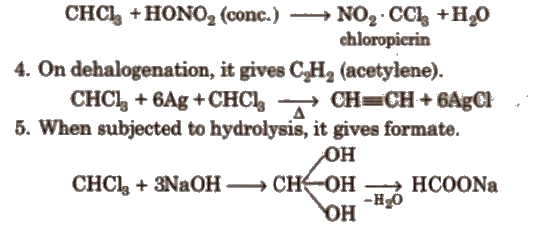
1. Oxidation of CHCl3 gives poisonous gas phosgene (carbonyl chloride).

To avoid this oxidation CHCl3 iI .toreci in dark brown bottles and filled to the brim. 1% ethanol is added to chloroform which converts harmful phosgene gas into diethyl carbonate.
2. CHCl3 is widely used in the production of freon refrigerant R-22.
3. On nitration, it gives tear producing insecticide substance chloropicrin.
2. Iodoform (tri-iodornethane, CHl3)
Iodoform is prepared by iodoform reaction.

Compounds containing either CH3CO- or CH3CH(OH) group form yellow colour iodoform with I2 and NaOH.
Iodoform when comes in contact with organic matter, decomposes easily to free iodine, an antiseptic. Due to its objectionable smell, it has been replaced by other formulations containing iodine.
Polyhalogen Derivatives
1. Tetrachloromethane (Carbon Tetrachloride, CCl4 )
Preparation
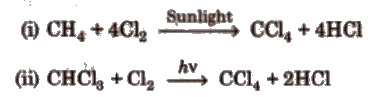
CCI4 is a colourless, non-inflammable, poisonous liquid, soluble in alcohol and ether.
Uses
Carbon tetrachloride is used
- as a solvent for oils, fats, resins
- in dry cleaning
- as fire extinguisher under the name ‘pyrene’.
2. Freons
The chlorofluorocarbon compounds of methane and ethane are collectively known as freons. These are usually produced for aerosol propellants, refrigeration and air conditioning purposes. Carbon tetra chloride when reacts with antimony trifluoride in the presence of SbCl5 as catalyst, dichlorofluromethane (freon) is obtained.
3. DDT (p, p’-Dichlorodiphenyltrichloroethane)
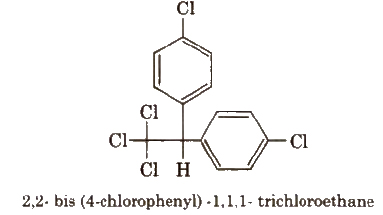
DDT is the first chlorinated organic insecticide. Its stability and fat solubility’is a great problem.
It is prepared from chloral and chlorobenzene in the presence of conc. H2SO4·
4. Perchloroethane (C2Cl6)
It is used as moth repellant and is also known as artificial camphor.
Subscribe to:
Posts (Atom)
BIOMOLECULES CHEMISTRY CLASS 12
BIOMOLECULES ( CHEMISTRY ) Carbohydrates: Polyhydroxy aldehydes or polyhydroxy ketones or compounds on hy...

-
REACTIONS BETWEEN HALOGENOALKANES AND HYDROXIDE IONS This page looks at the reactions between halogenoalkanes (haloalkanes or alkyl ha...
-
FREE STUDY MATERIAL FOR IIT-JEE FROM ALLEN COACHING INSTITUTE :- HELLO EVERYONE ! MYSELF HIMADRI MONDAL, EDITOR OF THIS BLOG. TODAY I...
